
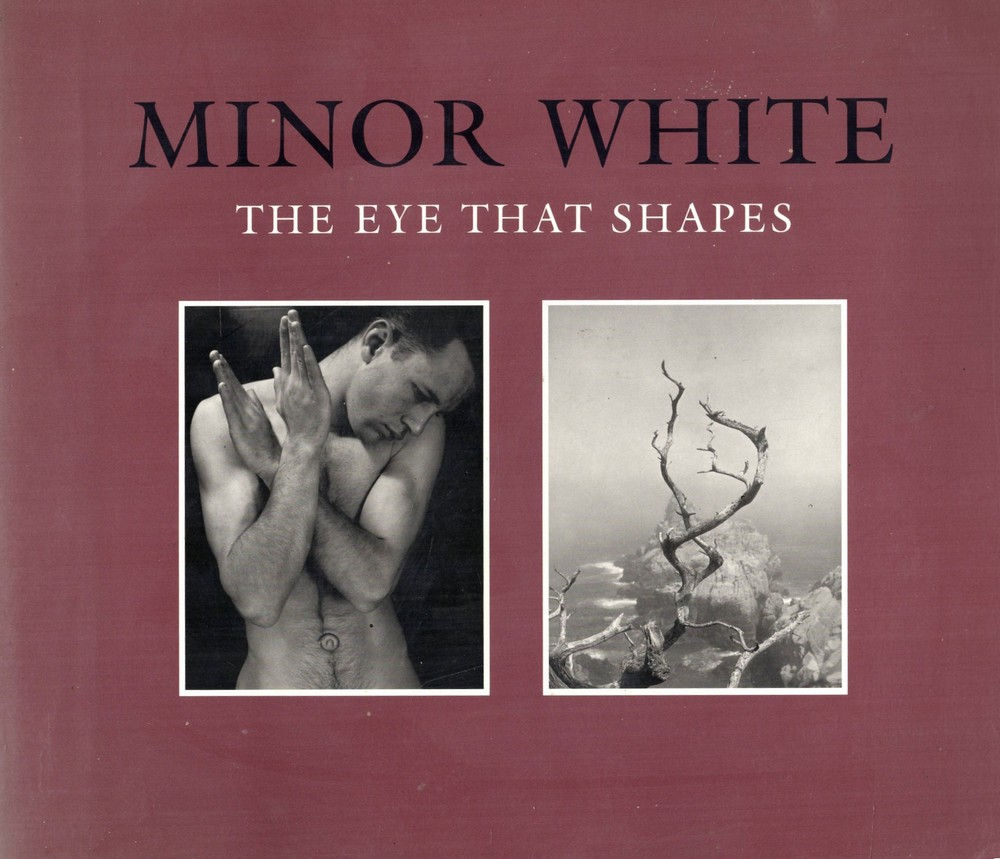

"MINOR WHITE: THE EYE THAT SHAPES" par Peter C. BUNNELL, Maria B. PELLERANO & Joseph B. RAUCH. Editions The Art Museum, Princeton University. 1989.
Ref LPB1210
MINOR WHITE: THE EYE THAT SHAPES
"MINOR WHITE: THE EYE THAT SHAPES" par Peter C. BUNNELL, Maria B. PELLERANO & Joseph B. RAUCH. Editions The Art Museum, Princeton University. 1989. Imprimé aux USA. Fort petit in-4, dos droit, format oblong, couverture souple cartonnée photo. 290 pages. Texte en anglais, illustré de (22+281) reproductions photographiques noir & blanc et 10 en couleurs, in-texte et hors texte, par Minor White. Ouvrage réalisé dans le cadre de l'exposition éponyme itinérante aux : The Museum of Modern Art, New York, du 27 Avril au 18 Juillet 1989 ; Portland Art Museum, Oregon, du 19 Septembre au 12 Novembre 1989 ; The Minneapolis Institute of Arts, du 20 Janvier au 25 Mars 1990 ; San Francisco Museum of Modern Art, 22 Juin au 19 Août 1990 ; International Museum of Photography at George Eastman House, Rochester, du 21 Septembre au 25 Novembre 1990 ; Museum of Fine Arts, Boston, du 11 Janvier au 17 March, 1991; The Art Museum, Princeton University, du 20 Avril au 15 Juin 1991.
"Minor White was one of the most important photographic artists active during the thirty years after World War II. Living during this period in San Francisco, then in Rochester, and finally near Boston, he produced a singular body of imagery that assures his place in the history of twentieth-century photography. His was a pictorial achievement that helped shape a distinctly modern American photographic style that is characterized by luminous clarity, lyricism, and grace. White's achievement should be understood in relation to a number of other major photographers of earlier generations. At the start of his career, it was Alfred Stieglitz and Edward Weston who exerted the most significant influence, and later, to a Iesser extent, it was Ansel Adams and Paul Strand. When White is joined with these artists, the five of them make an interesting study of how photography developed in this country between the 1930s and the 1960s. Weston was the supreme formalist, both in his seein and his use of the classical vocabulary of straightforward photography. Adams revealed within this idiom its larger expressive possibilities, and it was White who took the same idiom into the metaphoric realm…"
Ref LPB1210
